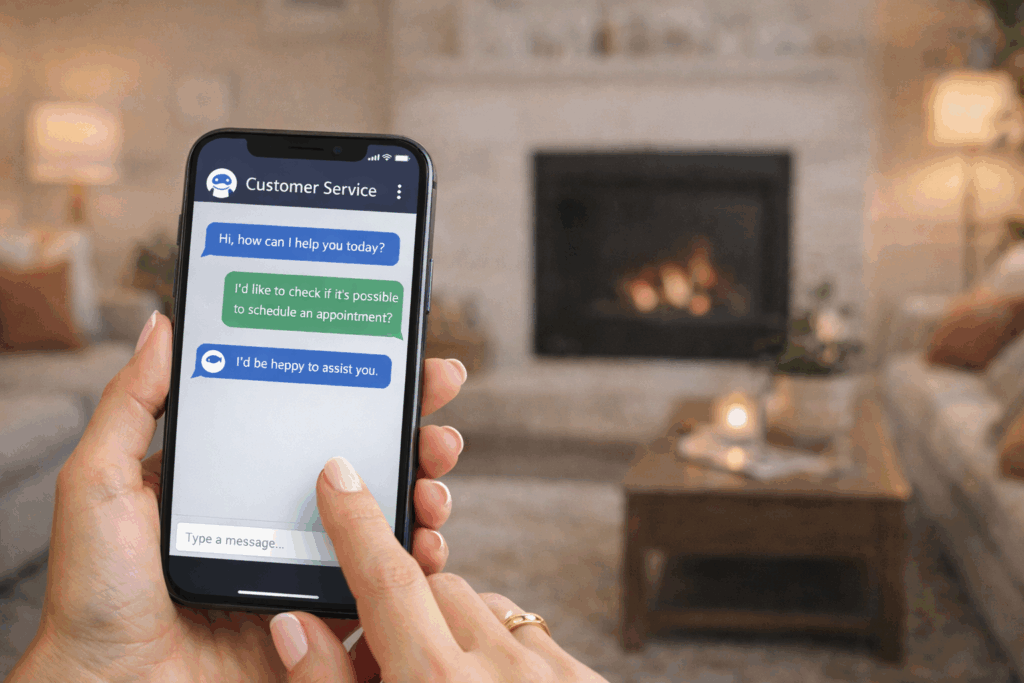

AI Voice Agent for Home Service Businesses: How HVAC, Plumbing, and Electrical Contractors Stop Losing Leads After Hours
If you run an HVAC company, a plumbing business, or an electrical contracting service, you already know that the phone is your lifeline. It rings when a homeowner has a problem they cannot fix themselves, and they need someone now. But here is the part that most contractors do not want to think about: a huge chunk of those calls come in after 5 PM, on weekends, or during the exact moments when your team is already tied up on another job.
That missed call is not just an annoyance. It is a paying customer who moved on to the next contractor on Google before you even saw the voicemail.
This is the core problem that an AI voice agent for home service businesses is built to solve. And in this post, we are going to break down exactly how it works, why it matters for trade contractors specifically, and what a real setup looks like in practice.
Why Contractors Lose More Leads Than They Realize
Most business owners assume their missed call rate is pretty low. In reality, industry data consistently shows that service businesses miss between 30 and 60 percent of inbound calls during peak demand periods. That number goes even higher in the trades, where techs are often on the roof, under a crawlspace, or in the middle of a diagnostic.
Think about what that actually means. If you are spending money on Google Ads to get your phone to ring, every call you miss is burning part of that budget with nothing to show for it. A homeowner whose AC dies on a Friday evening is not going to leave a voicemail and wait until Monday. They are going to call the next business that picks up.
The traditional answer to this was hiring a receptionist or using a basic answering service. Both options have real limitations. A receptionist works set hours, and a traditional answering service just takes a message. Neither one can actually book the job, qualify the caller, or push the information into your scheduling software the moment the call ends.
What an AI Voice Agent Actually Does
The term gets thrown around a lot, so let us be specific about what a proper AI answering service for contractors actually does when someone calls your business at 10 PM on a Saturday.
First, it picks up immediately. No hold music, no voicemail prompt. The caller hears a natural, conversational voice that asks what they need help with. The system understands what the person is saying, not just keywords, so it can handle a full description of the problem in plain language.
Second, it qualifies the call. For a plumbing business, this might mean figuring out whether it is a true emergency, like a burst pipe, or a non-urgent issue, like a slow drain. For an HVAC contractor, it means understanding whether the system is completely down or just underperforming. This kind of lead triage used to require a trained dispatcher sitting at a desk.
Third, it schedules the appointment directly into your existing system. Whether you use ServiceTitan, Housecall Pro, or another field service management platform, the booking happens in real time. By the time your morning dispatcher clocks in, the job ticket is already there, the customer has a confirmation, and your tech is scheduled.
This is what separates a real AI automation solution for HVAC, plumbing, and electrical businesses from a basic chatbot or voicemail. It is not just collecting a name and number. It is completing the intake process.
The After-Hours Problem in the Trades
Home service emergencies follow a very predictable pattern. They happen at the worst possible times. The furnace goes out on the coldest night of the year. The water heater starts leaking when everyone is getting ready for work. The circuit breaker trips during a dinner party.
In each of those situations, the homeowner is stressed, they are searching fast, and they are calling the first business that seems responsive. If your competitors have an AI voice agent handling inbound calls around the clock and you have a voicemail, you are already behind.
This is especially important for HVAC contractors during summer and winter peaks. Those are the weeks when call volume spikes far beyond what any office staff can handle, and every call that gets missed represents hundreds or even thousands of dollars in revenue that goes to someone else. A properly configured AI answering service captures all of it, every night, every weekend, without overtime costs or scheduling headaches.
What Real Integration Looks Like for Plumbing and Electrical Businesses
One of the questions we hear most often is whether an AI agent for plumbing contractors actually works with the software they are already using. The honest answer is that it depends entirely on how it was built.
A generic chatbot or a cheap answering service will take a message and send you an email. That is not integration. Real integration means the AI is connected directly to your field service management platform and can read your calendar, check your service area, verify pricing for standard jobs, and create the actual work order.
For electrical contractors, this level of integration is particularly valuable because electrical jobs often require permitting questions, panel type information, and location-specific code compliance. An AI agent that can gather all of that during the initial call saves your office staff significant time before the job even starts.
The goal of deep-sync integration is something we take seriously at RevUp Now. It is not enough to capture a lead. The entire intake workflow needs to be completed without anyone on your team having to follow up manually.
How This Fits Into a Broader Growth Strategy
For a home service business that wants to grow without just adding headcount, an AI voice agent is one of the most practical moves available right now. It addresses the single biggest revenue leak in the trades, which is the phone calls you are not answering, and it does it without requiring you to hire and train additional office staff.
But it is worth thinking about it as more than just an after-hours solution. During regular business hours, your office team is handling scheduling, managing active jobs, ordering parts, and dealing with customer questions. They cannot always pick up a new inbound call at exactly the right moment. An AI answering service acts as a first layer that handles the intake, so your team can focus on the work that actually requires a human.
When you combine that with the right automation process, you end up with a business that responds faster, books more jobs, and operates with less chaos, all without burning out your existing team.
What to Look For When Choosing an AI Voice Agent
Not all of these solutions are created equal, and for a home service business, the wrong choice can actually hurt your reputation. Here are the things that matter most:
- It should sound natural. A robotic or stilted voice will cause callers to hang up, which is worse than voicemail.
- It needs to handle real conversations, not just scripted prompts. Homeowners describe problems in their own words, and the system has to keep up.
- It must integrate with your existing tools. If it cannot connect to your scheduling software, it is just a fancy voicemail.
- It should be built for your specific industry. A system designed for e-commerce does not understand emergency dispatch logic or trade-specific job types.
- You need ongoing support and optimization, not just a setup fee and a goodbye. Your call patterns change seasonally, and the agent should be tuned accordingly.
The Bottom Line for Trade Contractors
The home service industry is competitive in a very specific way. You are rarely competing on price alone. You are competing on speed and trust. The contractor who answers first and makes booking easy wins the job, even if they charge a little more.
An AI voice agent for HVAC, plumbing, and electrical businesses is not a replacement for your team. It is the first person the customer meets, available every hour of every day, capable of doing the job that used to require a full-time dispatcher. And unlike a dispatcher, it never has a bad day, never puts someone on hold for ten minutes, and never forgets to enter the job into the system.
If you want to see exactly how this kind of setup works for a business like yours, reach out to the team at RevUp Now. We work specifically with service-based businesses in the trades, legal, healthcare, and facilities sectors, and we build these systems to fit the way your operation actually runs, not a generic template.
The calls are already coming in. The only question is whether you are capturing all of them.